
Integrated healthcare group
From active ingredient to the point of care.
Pranda Health operates across active pharmaceutical ingredients, finished dosage manufacturing, global supply chain and clinical services in the United States — so that medicine availability can be measured rather than assumed.

Coated modified-release pellets — the technology at the centre of the group’s formulation platform.
Four parts of one chain.
Most pharmaceutical supply is assembled from separate parties, each responsible for a single link. We hold more of the chain ourselves, which is what allows accountability for availability to sit in one place.

Active pharmaceutical ingredients
API and intermediate manufacture, custom synthesis, process development and optimisation, scale-up and technology transfer.
Active ingredients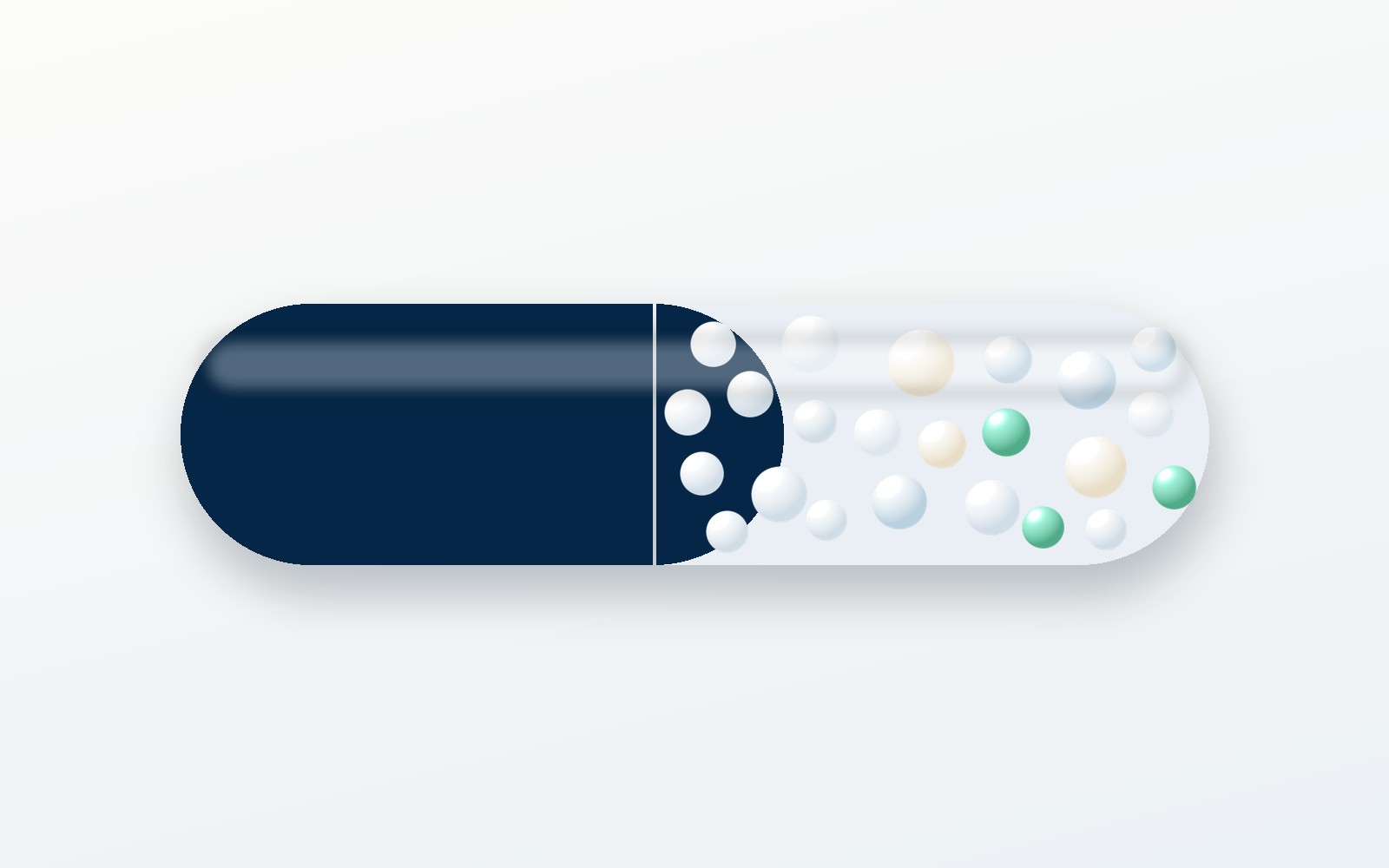
Finished dosage manufacturing
Oral solid dosage manufacture with a specialism in modified-release pellet technology, from formulation development to validated commercial batches.
Finished dosage
Global supply chain
Supplier qualification, material traceability, demand planning, safety-stock policy, serialisation and continuity planning.
Supply chainOne chain, six steps, mostly in-house.
Where an active ingredient and a finished dose are produced within one group, the two can be planned together. That shortens qualification, removes a commercial layer, and makes a raw-material problem visible before it becomes a shortage.

A medicine that exists somewhere is not a medicine on the shelf.
In most import-dependent health systems a product passes through manufacturers, international traders, agents, importers, distributors, warehouses, public procurement, hospitals and pharmacies before it reaches a patient.
Some of those functions are legally and operationally essential. Others are simply accumulated distance. Every avoidable handoff weakens demand visibility, lengthens replenishment cycles, adds mark-up, and blurs the question that actually matters: who is answerable when the shelf is empty?
We work the other way around.
The manufacturer stays connected to local inventory, service levels and product performance — through properly authorised local channels, never around them.Built one authorisation at a time.
Market access in pharmaceuticals is not a map exercise. Trade agreements create routes to investigate, not automatic entry. We expand in concentric horizons and enter each one only when the last is genuinely operating.
A programme that enters three countries before it has proven service levels in one ends up with three underperforming registrations and no evidence base. We would rather be measurably good in one market and expand from a record.
Built for regulated markets. Described precisely.
Our facilities are designed and operated in accordance with current Good Manufacturing Practice principles and/or other applicable requirements, under quality systems built to support products intended for regulated markets.
Documented quality systems
Change control, deviation management, supplier qualification, in-process control, stability testing and batch release are governed by a documented quality management system across every stage of production.
On-site analytical capability
Manufacturing is supported by analytical laboratories, with methods validated against recognised pharmacopoeial standards and full batch documentation available to customers.
Audit-ready by design
We support customer audits, technical due diligence and regulatory documentation requests, and maintain the validation records and technical files customers need for their own filings.
Where we are, and for how long.
Figures reflect management-supplied information as at August 2026.
Next step
Let’s talk about supply in your market.
We work with health ministries, procurement agencies, hospital groups, distributors and manufacturing partners.